
Low Bow vs Mid Bow: Which Hockey Stick Is Right for You?
Compare two popular hockey stick profiles and choose the shape that supports the skills you use most.
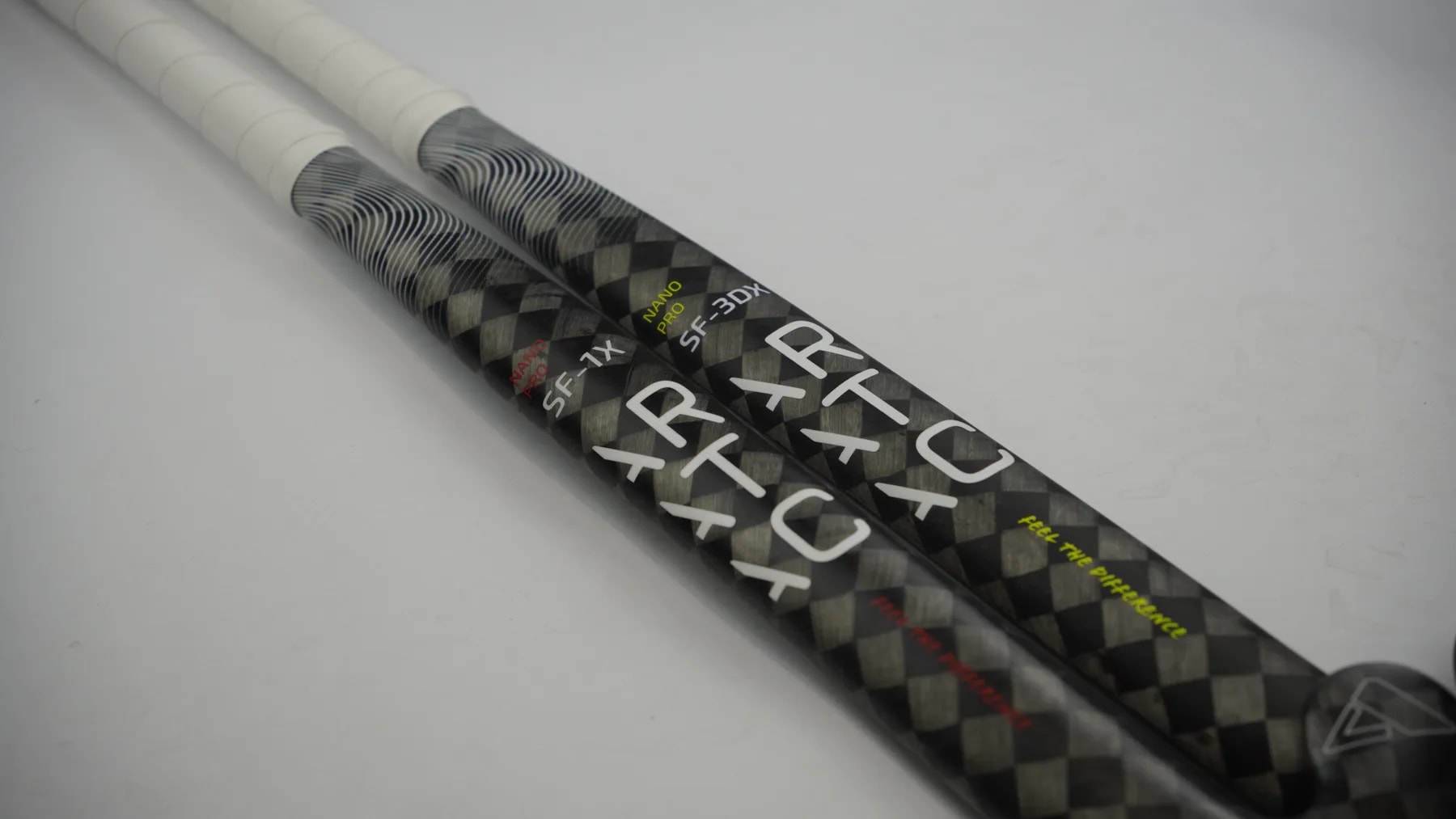
If a new stick makes it easier to lift the ball but your first touch suddenly feels less settled, the bow may be doing exactly what it was designed to do. Moving the curve closer to the head changes how the shaft and face arrive at the ball.
A mid bow tends to feel familiar through flat passes and receives. A low bow gives easier access around or underneath the ball for 3D skills, aerials and drag actions. Neither is a badge of ability; choose around the actions you repeat most often.
Profile basics
What the bow position actually changes
On a mid-bow stick, the curve is centred farther up the shaft. The face tends to feel predictable in conventional ball positions, which suits receiving, flat passing and carrying. On a low-bow stick, more of the curve is concentrated closer to the head, placing the handle and face at a different angle around the ball.
The profile can make certain movements easier to access, but it does not replace technique. Head shape, balance point, weight and stiffness also affect the result.
Mid bow
Balanced feel for core hockey skills
Players often choose a mid bow when they want one familiar platform for receiving, distributing and carrying. It can be especially reassuring for developing players because the face position feels straightforward during common push passes and first touches.
- A composed, all-round profile for passing and receiving.
- A natural option for players who use mostly grounded skills.
- A sensible reference point if you are unsure which profile you prefer.
Low bow
Extra leverage around and underneath the ball
A low bow can help you get the shaft beneath or around the ball during lifts, aerial-style passes, drag actions and quick changes of angle. That can suit any player who uses those skills regularly; your position or playing level does not make the decision for you.
The trade-off is that the face may feel lively until your hands and ball position adjust. Test receiving and flat passing as carefully as the exciting skills.
Your choice
Match the profile to repeatable skills
List the actions you perform most often in a match, then test each profile with those actions rather than with one spectacular shot. Receive at pace, pass off both feet, carry through cones and attempt the lifted skills you can already execute safely.
Choose the stick that improves your average touch. If both feel comfortable, composition and balance may become the deciding factors; our carbon content guide explains the next trade-off.