
Hockey Stick Carbon Content Explained
Carbon percentage matters, but construction, balance and your preferred feel matter just as much.
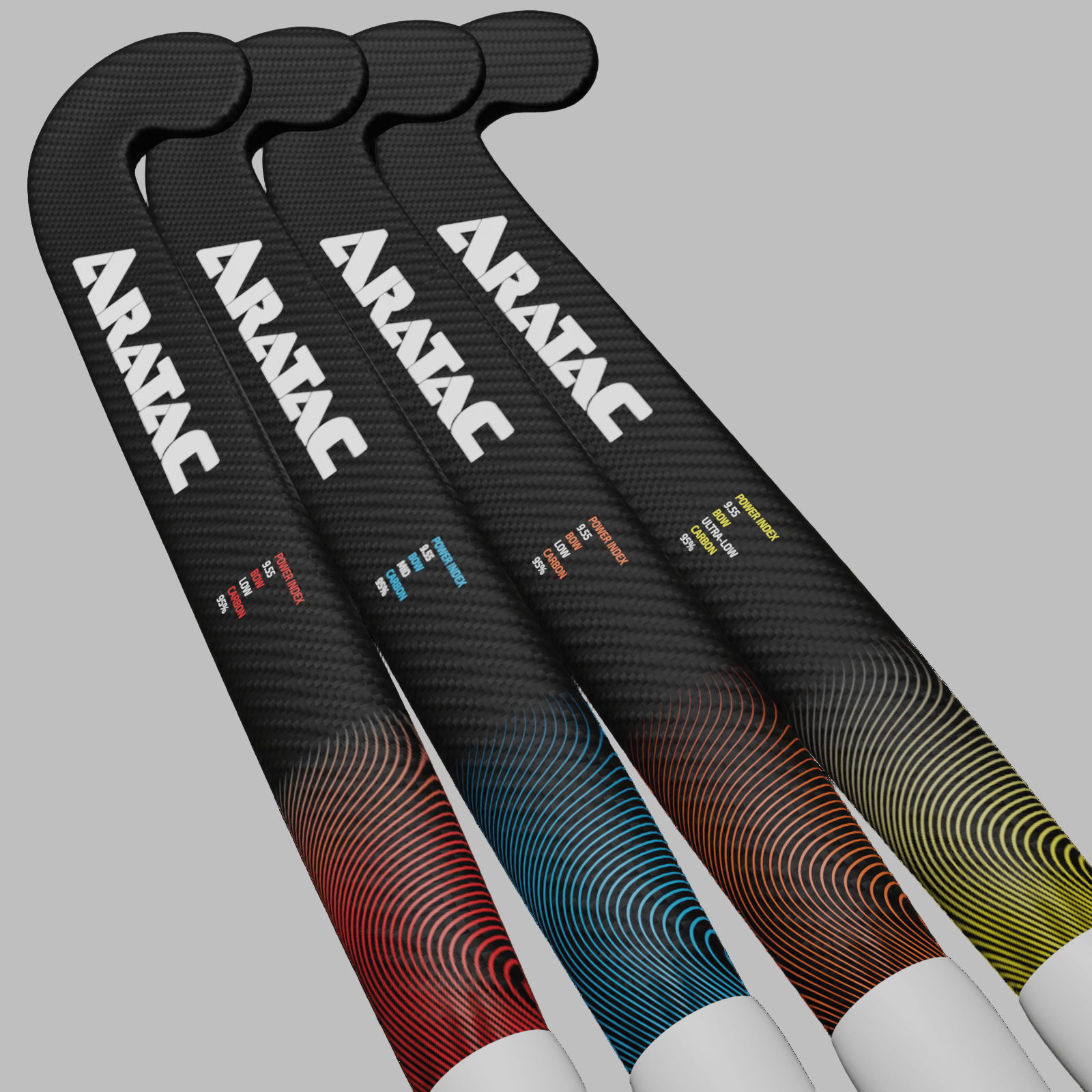
Pick up two sticks with different carbon figures and the first thing you may notice is not extra power. It is the sound and feel of the first touch. One can feel crisp and immediate; the other calmer in the hands.
Carbon percentage is useful, but it is not a quality score. A stiffer shaft flexes less on clean contact, while a more blended construction can feel softer and more forgiving. Two sticks carrying the same percentage can still feel different because fibre grade, lay-up, resin, balance and shape all matter.
The label
What a carbon percentage can — and cannot — tell you
The stated percentage describes the carbon contribution to a stick's composite construction, normally alongside materials such as glass fibre, aramid and resin. It gives you a useful indication of design intent, but not a complete blueprint.
Fibre grade, weave, orientation, resin system, wall thickness, head shape and balance all influence feel. Percentages are therefore most useful when comparing sticks within the same range; identical numbers from different makers need not play identically.
Higher carbon
Firm response and direct feedback
A higher-carbon lay-up is generally stiffer, so the shaft flexes less during a clean strike or pass. Many experienced players like the immediate response and precise feedback that creates.
That directness can also make imperfect contacts feel harsher and demand consistent hands when receiving. More carbon does not create power on its own: timing, technique and the complete stick design still determine the outcome.
- Best considered by players with repeatable contact and a clear preference for a firm feel.
- Often chosen for direct feedback during passing and shooting.
- Worth testing on receiving as well as striking before you decide.
Blended construction
Softer touch and progressive feedback
Increasing the proportion of other fibres can introduce more flex and vibration damping. Developing players often appreciate that calmer sensation, while experienced players may choose it deliberately for touch-led play.
A lower carbon figure is not shorthand for a beginner-only stick. It is simply a different balance of feedback, stiffness and comfort, and quality depends on the complete construction rather than one material.
Practical choice
Choose with your hands, not the headline number
Start with the feel of your current stick. If you want a crisper response and your ball contact is reliable, compare a modest step upwards. If receiving feels noisy or the stick is tiring to control late in sessions, test a more blended construction.
Use the same ball and surface where possible, and compare first touch, push passing and striking rather than relying on dry swings. Combine that result with the right bow profile and length for a well-rounded choice.