
A Short Guide to Penalty Corners
Understand why a penalty corner is awarded, how it starts and the simple principles behind attacking and defending it.
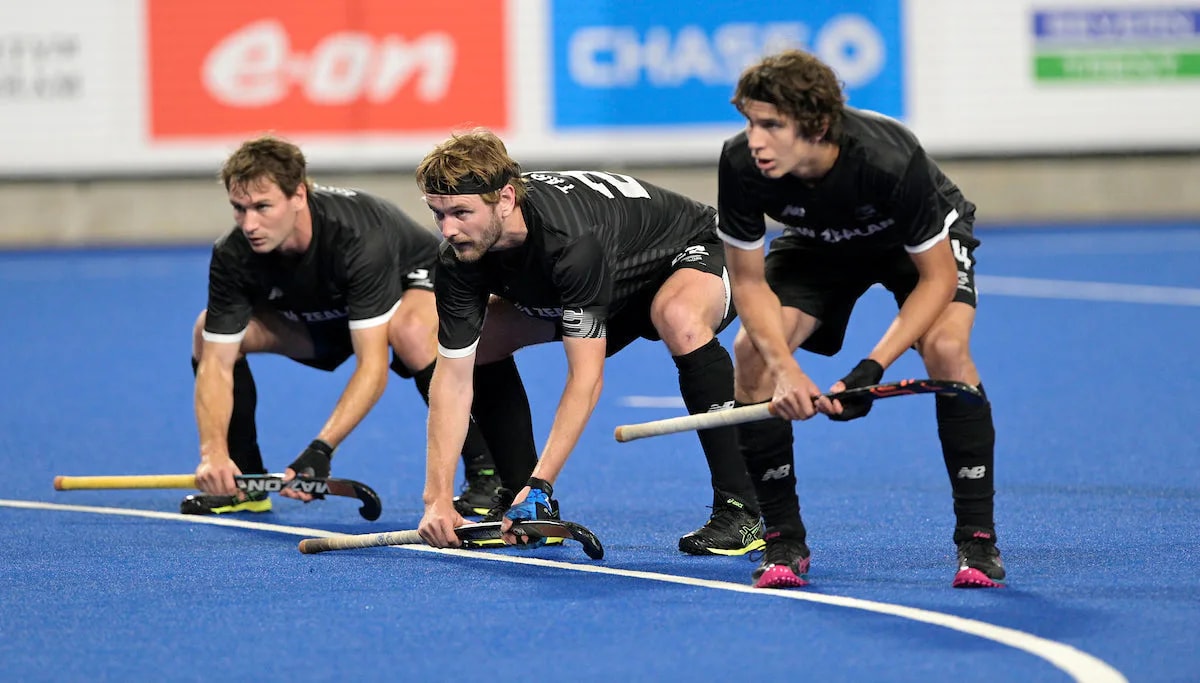
Penalty corners look complicated because ten players move at once. Strip the routine back and it starts with three things: a clean injection, a controlled first touch and a decision before the runners arrive.
This guide reflects the FIH Rules of Hockey published and effective from March 2026. Governing bodies and competitions can apply their own regulations, particularly around timings and protective equipment, so check the current FIH rules and your competition's latest rules before playing or coaching.
The award
Why is a penalty corner given?
A penalty corner may follow a defender's offence inside the circle when it does not prevent a probable goal, an intentional offence by a defender within their defensive 23-metre area, or a defender intentionally playing the ball over the back-line. It is also awarded if the ball becomes lodged in a defender's clothing or equipment inside the circle.
The exact sanction depends on the location, intent and effect of the offence. An offence that prevents a probable goal can instead lead to a penalty stroke, so players should follow the umpire's decision rather than assuming every circle offence has the same outcome.
The set-up
How the penalty corner begins
The ball is placed on the back-line inside the circle, at least 10 metres from a goal-post on the attack's chosen side. The injector plays it from the back-line with at least one foot outside the field. Other attackers start outside the circle, and nobody except the injector may be within five metres of the ball.
Up to five defenders, including the goalkeeper, set up behind the back-line; the remaining defenders wait beyond the centre-line. Attackers cannot enter the circle and defenders cannot cross their starting line until the ball has been played.
- Injector: delivers a flat, reliable first pass and then rejoins the phase.
- Stopper: controls the injection outside the circle for the next action.
- Striker or distributor: shoots, slips the ball or moves it to a second option.
- Runners and goalkeeper: defend agreed lanes while reacting to the actual play.
Scoring
The ball must leave the circle first
A goal cannot be scored until the ball has travelled outside the circle. If the first shot at goal is a hit rather than a push, flick or scoop, it must cross the goal-line — or be on a path to cross it — no higher than 460 mm before any deflection. Flicks, scoops, deflections and later hits may be raised, but dangerous play remains an offence.
That difference is why teams practise both the stop and the chosen finish. A routine is only useful when every player knows the ball position, the legal scoring condition and the safe response if the first option is unavailable.
Team principles
Build a simple routine before adding disguise
For attackers, a consistent injection and first touch create more value than a complicated call with uncertain timing. Agree a primary finish, one safe variation and a clear recovery shape if the shot is blocked. Practise every role, including the players who collect rebounds and protect against a counter-attack.
For defenders, communication starts before the injection. Confirm who leads the first run, who covers a pass and where the outlet will be after a regain. Stay responsive: rushing a remembered route without reading the ball can open the space the routine is designed to protect.
Safety and updates
Protective equipment is part of the routine
Use correctly fitted protective equipment required by your competition and follow the instructions of coaches and officials. FIH event regulations require defending field players to wear face masks at penalty corners, but arrangements in domestic and junior competitions can differ.
After the corner is completed, defenders should remove penalty-corner equipment safely and as soon as they have a suitable opportunity. Never throw equipment aside where it could strike someone or interfere with the ball. Rules and event regulations change, so check the current versions before each season or tournament.